Welcome to TRUSTLINK
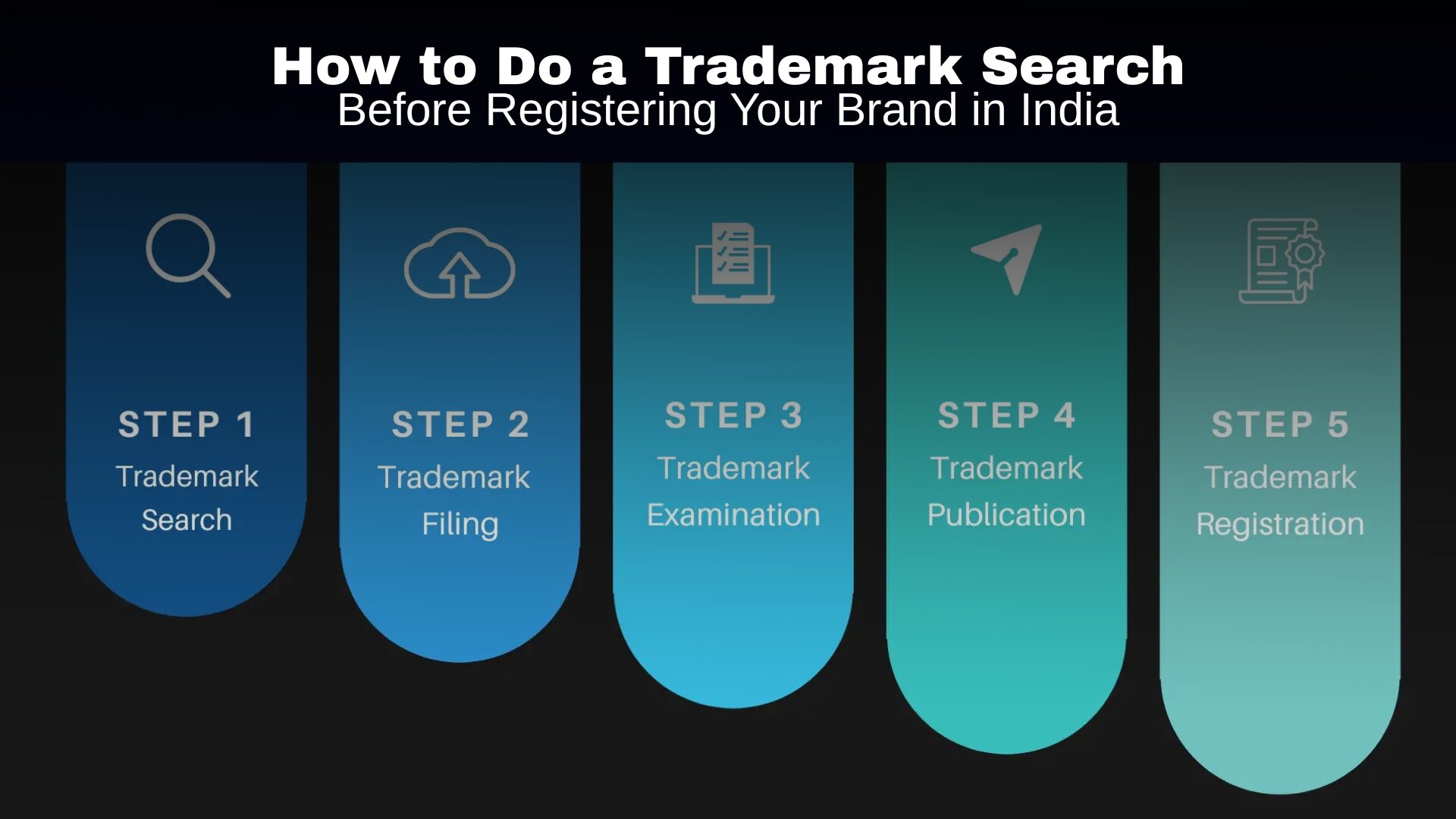
Every single day in India, hundreds of enthusiastic founders pay trademark filing fees, wait six months, and receive a devastating “Objected” status from the Trade Marks Registry. Why? Because they fell in love with a brand name, printed the packaging, bought the domain, and launched the marketing campaign without checking if someone else already owned the rights to that exact name.
What is a trademark search, and why is it essential before filing?
A trademark search is the process of checking the Indian government’s intellectual property database to see if your proposed brand name, logo, or tagline is already registered or applied for by another business. It is an essential first step because filing a trademark that conflicts with an existing one leads to automatic government objections, expensive legal oppositions, and the total loss of your filing fees.
Table of Contents
Why a Trademark Search is Absolutely Non-Negotiable
Skipping the trademark search is the most expensive mistake a new business owner can make. In 2026, the Indian intellectual property landscape is hyper-competitive. Operating without a preliminary clearance search exposes your business to severe risks:
- High Risk of Government Objection: The Trade Marks Registry actively cross-references your application against millions of existing records. If your name is identical or deceptively similar to a prior mark in the same industry, the examiner will issue an objection under Section 11 of the Trade Marks Act. You will then have to pay a lawyer to draft a lengthy response, delaying your registration by months.
- Threat of Opposition and Infringement Litigation: Even if the government examiner misses the similarity, the original trademark owner will not. They have a 4-month window to file a formal “Opposition” against your mark when it is published in the Trademark Journal. Worse, if you are actively trading under their name, they can sue you for infringement, leading to court injunctions that freeze your business operations overnight.
- The Devastating Cost of Forced Rebranding: Imagine spending ₹5,00,000 on custom-branded inventory, packaging, and digital assets, only to receive a cease-and-desist letter forcing you to change your name. A free 10-minute search upfront saves you from catastrophic rebranding costs later.
Step-by-Step Guide: How to Do a Trademark Search in India
Conducting a basic clearance check on the official government portal is completely free. Follow these exact steps to verify if your brand name is safe to use.
Step 1: Go to the Official IP India Public Search Portal
Open your web browser and navigate to the official trademark registry website. While the main e-filing portal is located at ipindiaonline.gov.in, the specific direct link for the search database is tmrsearch.ipindia.gov.in/tmrpublicsearch.
Note: The government portal can sometimes be slow or face downtime. Ensure your browser allows pop-ups and Javascript.
Step 2: Choose the Right Search Type
Once you are on the search screen, you will see three main search options:
- Wordmark: Use this to search for the actual text of your brand name. This is the most important and common search.
- Phonetic: Use this to find words that sound similar but are spelled differently (e.g., searching “Klear” will also pull up “Clear”).
- Vienna Code: This is a specialized search used only for logos and visual devices. If your logo has a picture of a leaping tiger, you use the Vienna Code corresponding to “tigers” to see if anyone else registered a similar tiger logo.
For this tutorial, select Wordmark.
Step 3: Select the Correct Trademark Class
In India, trademarks are divided into 45 different categories called the Nice Classification system. Goods are in Classes 1–34, and Services are in Classes 35–45. You do not own your name across every industry—you only own it in your specific class.
- Enter your brand name in the “Wordmark” field.
- Choose your matching condition (Select “Contains” rather than “Starts With” for a broader, safer search).
- Enter your specific two-digit class number in the “Class” field. (If you aren’t sure which class you belong to, refer to the master table in the next section of this guide).
Step 4: Analyze the Government Search Results
Click search. The database will generate a list of all matching or partially matching trademarks. Here is exactly what you need to look for in the results table:
- Identical Marks: Is there an exact spelling match for your brand name in your specific class? If yes, and the status says “Registered,” you cannot use this name.
- Prefix and Suffix Matches: If your name is “AquaFlow,” look out for marks like “AquaFlows,” “AquaFlow Plus,” or “The AquaFlow.”
- Check the Application Status: Pay close attention to the “Status” column.
- Registered: Fully protected. Do not touch.
- Objected / Opposed: Someone tried to register it, but it is facing legal hurdles.
- Abandoned / Refused: The application is dead. The name might be available, but proceed with high caution.
Step 5: Check for Common Law (Unregistered) Trademarks
The government database only shows companies that actually applied for a trademark. However, under Indian “Common Law,” a company that has been using a name for 10 years without registering it still has prior rights over a new company that tries to register it today.
- Run a deep Google search for your proposed brand name plus your industry keyword.
- Search Instagram, Facebook, and LinkedIn for exact name matches.
- Check the MCA (Ministry of Corporate Affairs) portal to see if a Private Limited company already exists with that exact name.
- Check domain name registrars (like GoDaddy) to see if the .in or .com website is actively being used by an Indian competitor.
Step 6: Interpret Your Results (The Traffic Light System)
- Green Zone: The IP India search returns “No Records Found” for your name in your class, AND your Google/social media search shows no competitors using it. You are clear to file immediately.
- Amber Zone: You found a similar name, but it is in a completely different class (e.g., you sell software under Class 9, but there is a shoe brand using the name in Class 25). You can generally proceed, provided it is not a “Well-Known Trademark” like Tata or Reliance.
- Red Zone: You found an identical or phonetically similar mark in your exact class, and the status is “Registered” or “Accepted & Advertised.” Stop immediately. You need to pick a new brand name.
Understanding Trademark Classes in India
To execute Step 3 accurately, you must know your class. Filing under the wrong class means your trademark is legally useless. Here is a comprehensive breakdown of the 45 trademark classes in India.
| Class No. | Category (Goods 1-34) | Common Examples |
| 1 | Chemicals | Industrial chemicals, resins, manures |
| 2 | Paints | Varnishes, lacquers, anti-rust |
| 3 | Cosmetics & Cleaning | Perfumes, soaps, essential oils, bleach |
| 4 | Lubricants & Fuels | Industrial oils, greases, candles |
| 5 | Pharmaceuticals | Medicines, dietary supplements, baby food |
| 6 | Common Metals | Metal hardware, alloys, metal pipes |
| 7 | Machinery | Industrial machines, motors, incubators |
| 8 | Hand Tools | Cutlery, razors, manual hand tools |
| 9 | Technology & Electronics | Software, apps, computers, smartphones |
| 10 | Medical Equipment | Surgical instruments, artificial limbs |
| 11 | Appliances | ACs, refrigerators, water purifiers, ovens |
| 12 | Vehicles | Cars, bicycles, drones, auto parts |
| 13 | Firearms | Explosives, ammunition, fireworks |
| 14 | Jewelry | Precious metals, watches, diamonds |
| 15 | Musical Instruments | Pianos, guitars, drums |
| 16 | Paper & Print | Books, magazines, stationery, cardboard |
| 17 | Rubber & Plastics | Asbestos, mica, flexible non-metal pipes |
| 18 | Leather Goods | Bags, wallets, luggage, umbrellas |
| 19 | Building Materials | Cement, asphalt, non-metal monuments |
| 20 | Furniture | Chairs, beds, mirrors, plastic goods |
| 21 | Household Utensils | Glassware, cookware, brooms, sponges |
| 22 | Ropes & Textiles | Canvas, sails, sacks, raw fibrous materials |
| 23 | Yarns & Threads | Textile yarns, sewing threads |
| 24 | Textiles | Bed covers, fabrics, tablecloths |
| 25 | Clothing & Apparel | Shirts, shoes, headgear, fashion brands |
| 26 | Lace & Embroidery | Ribbons, buttons, artificial flowers |
| 27 | Floor Coverings | Carpets, rugs, linoleum, wallpaper |
| 28 | Toys & Sports | Board games, gym equipment, action figures |
| 29 | Processed Foods (Meat/Dairy) | Milk, cheese, processed meat, edible oils |
| 30 | Staple Foods (Coffee/Spices) | Coffee, tea, rice, sugar, bread, spices |
| 31 | Agricultural Products | Fresh fruits, vegetables, seeds, live animals |
| 32 | Beverages | Mineral water, fruit juices, soft drinks |
| 33 | Alcoholic Beverages | Wine, whiskey, vodka (except beer) |
| 34 | Tobacco | Cigarettes, matches, smokers’ articles |
| Class No. | Category (Services 35-45) | Common Examples |
| 35 | Business & Advertising | E-commerce, retail stores, marketing agencies |
| 36 | Financial & Real Estate | Banks, insurance, real estate brokers |
| 37 | Construction & Repair | Builders, mechanics, installation services |
| 38 | Telecommunications | Internet providers, broadcasting |
| 39 | Transport & Logistics | Courier services, travel agencies, packing |
| 40 | Treatment of Materials | Tailoring, metal casting, water treating |
| 41 | Education & Entertainment | Schools, coaching, event management, films |
| 42 | IT & Scientific Services | SaaS, web development, software design |
| 43 | Food & Hospitality | Restaurants, hotels, cafes, cloud kitchens |
| 44 | Medical & Beauty | Hospitals, salons, agriculture services |
| 45 | Legal & Security | Law firms, security guards, personal services |
Common Mistakes in DIY Trademark Searches
While the government portal is free and accessible, inexperienced founders frequently make critical errors during their search that lead to rejected applications months later.
- Only Searching the Exact Spelling: The trademark registry operates on the principle of “deceptive similarity.” If you search for “KwikBite” and find nothing, you might think you are safe. But if “QuickBite” is already registered in your class, your application for “KwikBite” will be instantly rejected. You must search variations.
- Ignoring Phonetically Similar Marks: Replacing a ‘C’ with a ‘K’, or an ‘I’ with a ‘Y’ does not fool the trademark examiner. “Clymate” and “Klimate” are legally viewed as the exact same mark.
- Forgetting to Check All Relevant Classes: Many modern businesses straddle multiple classes. If you are launching a D2C clothing brand and an e-commerce website to sell those clothes, you cannot just search Class 25 (Clothing). You must also search Class 35 (Retail/E-commerce). If you miss one, half your business remains unprotected.
- Disregarding “Abandoned” or “Refused” Applications: Founders often see a conflicting mark marked as “Abandoned” and assume the name is free for the taking. However, the original applicant might still be using the name in the market without the registration, which gives them prior common law rights to sue you if you try to register it.
When to Hire a Professional for Your Trademark Search
A basic DIY search on the IP India portal is an excellent first filter. If your DIY search reveals a direct copy, you know instantly to choose a new name without spending a rupee. However, a “clear” DIY search does not guarantee legal safety.
This is where a professional trademark attorney becomes invaluable. When you hire an expert for a comprehensive trademark search, they go far beyond typing a word into a box.
What a Professional Search Covers That a DIY Search Misses:
- Cross-Class Conflict Analysis: A lawyer knows which classes overlap. For instance, a Class 29 food product can be blocked by a Class 30 beverage mark if the registry deems the goods “associated.”
- Advanced Phonetic Mapping: Attorneys use premium proprietary databases to run complex phonetic algorithm searches, catching sound-alike conflicts that the clunky government portal frequently misses.
- Visual Logo (Vienna Code) Checks: Searching for a logo’s specific visual elements requires deep knowledge of the Vienna Agreement classification. A lawyer can pinpoint if your geometric logo shape infringes on an existing mark.
- Risk Probability Reporting: Instead of a simple “yes” or “no,” an attorney provides a legal opinion detailing the exact percentage risk of an objection, and formulates a strategy to bypass potential conflicts before you file.
Frequently Asked Questions (FAQ)
Q: Is trademark search free in India?
A: Yes, conducting a basic trademark search on the official IP India public search portal (tmrsearch.ipindia.gov.in) is completely free of charge. You do not need to create an account or pay a government fee to view the public registry data.
Q: Can two businesses have the same trademark in different classes?
A: Yes, identical trademarks can coexist if they operate in completely unrelated industries (different classes), provided the original mark is not a “well-known trademark.” For example, “Polo” is a registered trademark for mints (Class 30) and also a completely separate registered trademark for clothing (Class 25).
Q: What if my trademark search shows a similar mark but the status is ‘Abandoned’?
A: An ‘Abandoned’ status means the applicant failed to respond to the registry, and their application is dead. However, you must still investigate if that business is actively trading in the market. If they are, they hold common law rights and can still legally oppose your new application.
Q: Do I need to search globally if I am only selling in India?
A: If you only plan to manufacture, sell, and market your goods within the borders of India, you only need to clear the Indian trademark database. Trademark rights are strictly territorial.
Q: How long does it take for a newly filed trademark to appear in the search portal?
A: Once a new trademark application is filed and the government fee is paid, it typically appears in the IP India online search database within 24 to 48 hours.
Don’t Leave Your Brand to Chance. Let TrustLink Handle It.
Your brand name is the foundation of your company’s future equity. Relying on a quick five-minute DIY search to protect a business you intend to scale into a multi-crore enterprise is a massive uncalculated risk.
At TrustLink, our intellectual property attorneys specialize in deep-dive, multi-layered trademark clearance searches. We don’t just look for exact matches; we cross-reference phonetic similarities, overlapping nice classifications, and common law usage to provide you with a bulletproof legal opinion on your brand’s availability.
Once your brand name is cleared, our team manages the entire filing process, responding to examiner objections, and securing your final registration certificate seamlessly.
Stop guessing if your brand name is safe. Contact TrustLink today for a comprehensive professional trademark search and secure your intellectual property before your competitors do.